

Designing the Desk Cart
The perfect balance of function and versatility, our latest product created a new category. Peel back the curtain to discover the design process that led us to the desk cart.
A Deeper Understanding
After taking desk organization to the limit with the Grovemade Desk and Desk Shelf systems, Ken and Sean stopped product development and went back to ground zero with home office research. This time, they were totally focused on the space beyond the desk. They examined more than 250 home offices from pictures customers sent, interviewed eight customers through video chat, and visited seven customers’ home offices in person. The result was a deeper understanding of our customers, products, and company, and the new direction that will guide Grovemade’s product design for years to come.
The first product we designed from that research was the desk cart.
Finding Our North Star
From the outset, Ken and Sean wanted to start with as blank a canvas as possible to build a product that came from the customer’s point of view. Their combined findings led to what we call our North Star, a foundational set of principles, product constraints, and solutions to problems that guide every aspect of our design.


KEN TOMITA (Grovemade Co-Founder): Home offices always look pristine on social media. But in reality, they rarely look like that.


SEAN KELLY (Lead Designer): Our customers were really open with us. They didn’t clean up. They didn’t prepare for our visit. We asked them to show us their workspace in the wild. And they did.
During the research, we saw a universal pain point. Customers struggled to organize secondary items—printers, random supplies, files—things that they needed occasionally but not all the time. The rest was clutter in the periphery; workspace hangnails that created dissonance. Unwieldy drawer systems on swivel wheels, home to loose paperclips, staples, and a nest of cords belonging to devices long discarded.
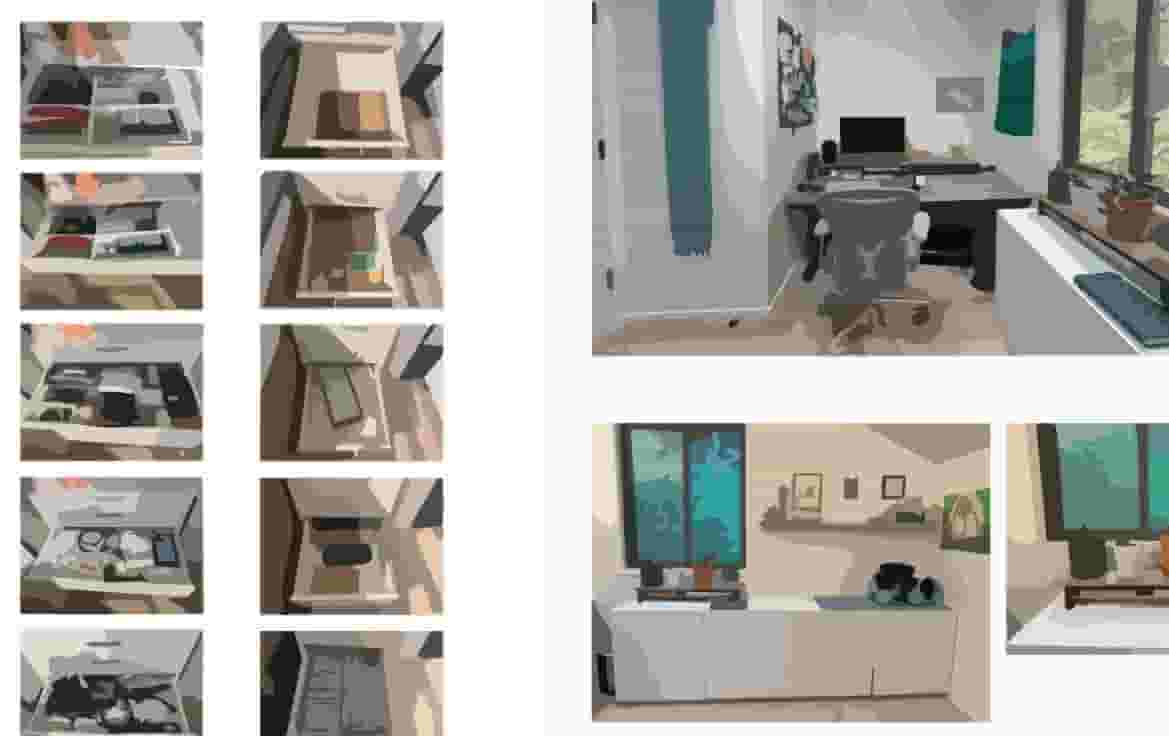

In nearly every home office, we saw drawers with intricate organization that required careful dismantling to reach stuff in the back. In fact, many of our customers couldn’t tell us what was in their file cabinet drawers. Many dreamed of having L-shaped desks but lamented their lack of square footage to fit such a large item.
KEN TOMITA: Once we determine a ubiquitous problem, we know we’re on to something special.
SEAN KELLY: We zeroed in on the file cabinet and wondered how we could elevate it.
As a desktop extension, all file cabinets had the same drawback. If the cabinet was flush with the desk’s leading edge, it created dead space in the back. If the cabinet was pushed back, there was a disrupting line break in their workspace. To solve these problems, we decided to make the new product as deep and as tall as the standard desk height to eliminate dead space and ensure a level extension of the desk.
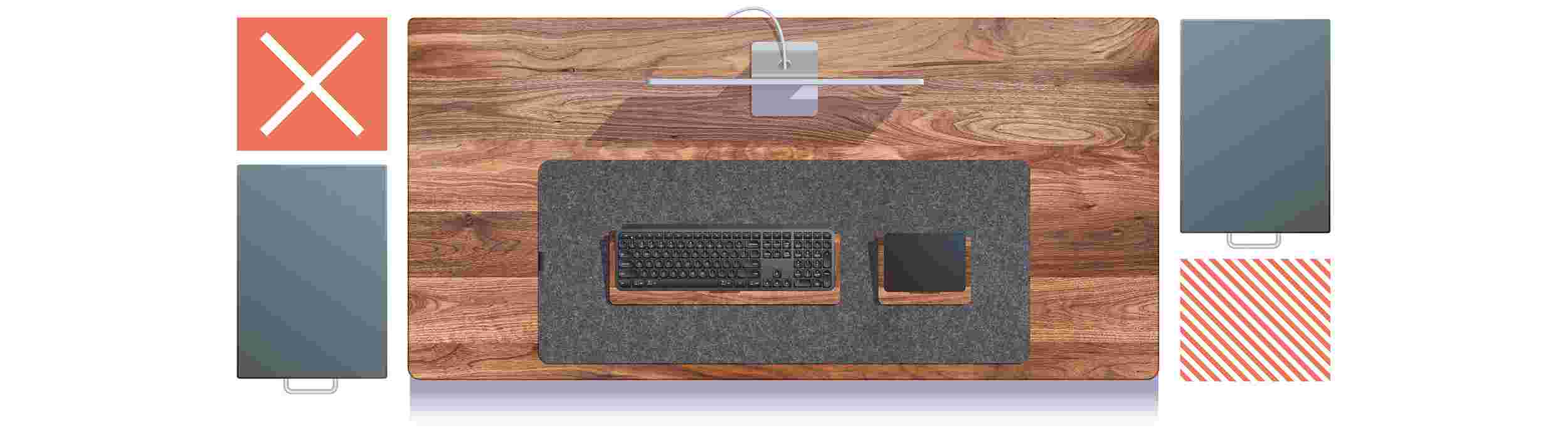

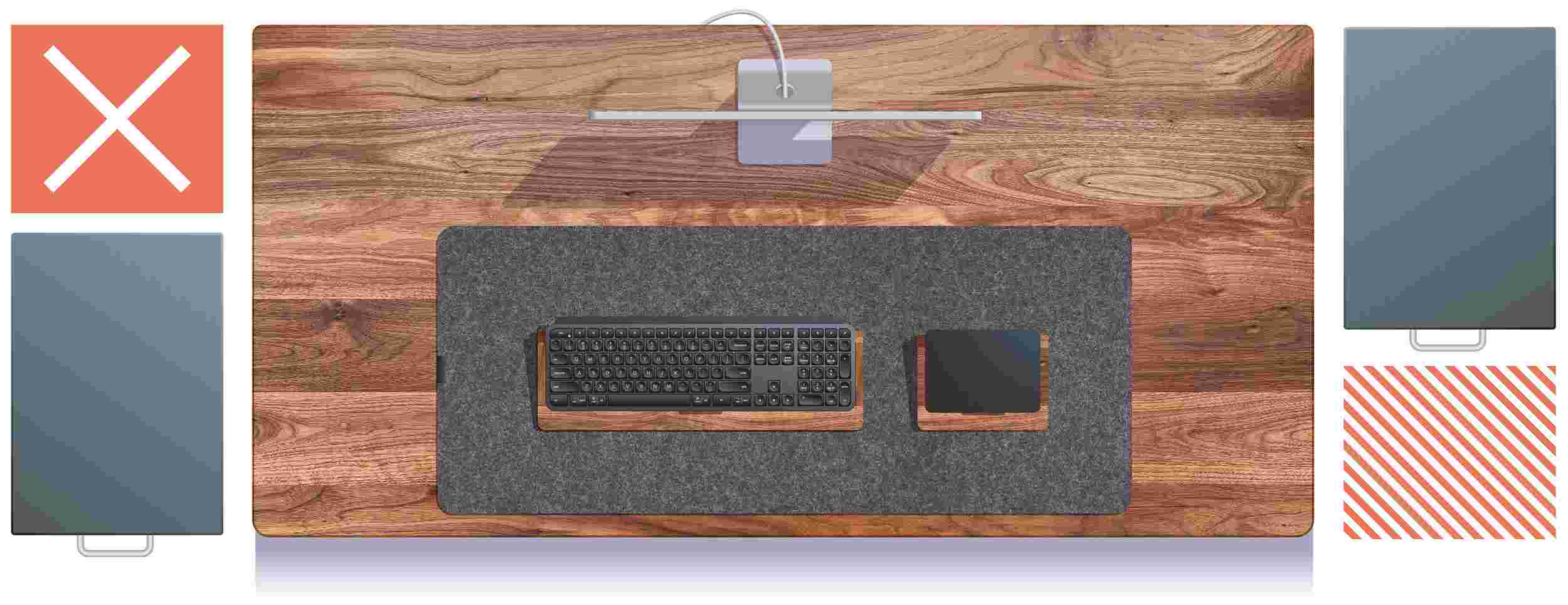

Our desktop is a fairly standard 28" x 58", so designing our desk cart to live beside our desk meant that it would fit nicely next to a majority of desks on the market.
However, this size meant that we couldn't use traditional drawers—fully extended, they would be too deep. We wondered how we could offer ease of access with an open storage system and give customers the ability to stow the tools and items they didn’t want out in the open.
The answer: the product had to be on wheels.
However, this size meant that we couldn't use traditional drawers—fully extended, they would be too deep. We wondered how we could offer ease of access with an open storage system and give customers the ability to stow the tools and items they didn’t want out in the open.
The answer: the product had to be on wheels.


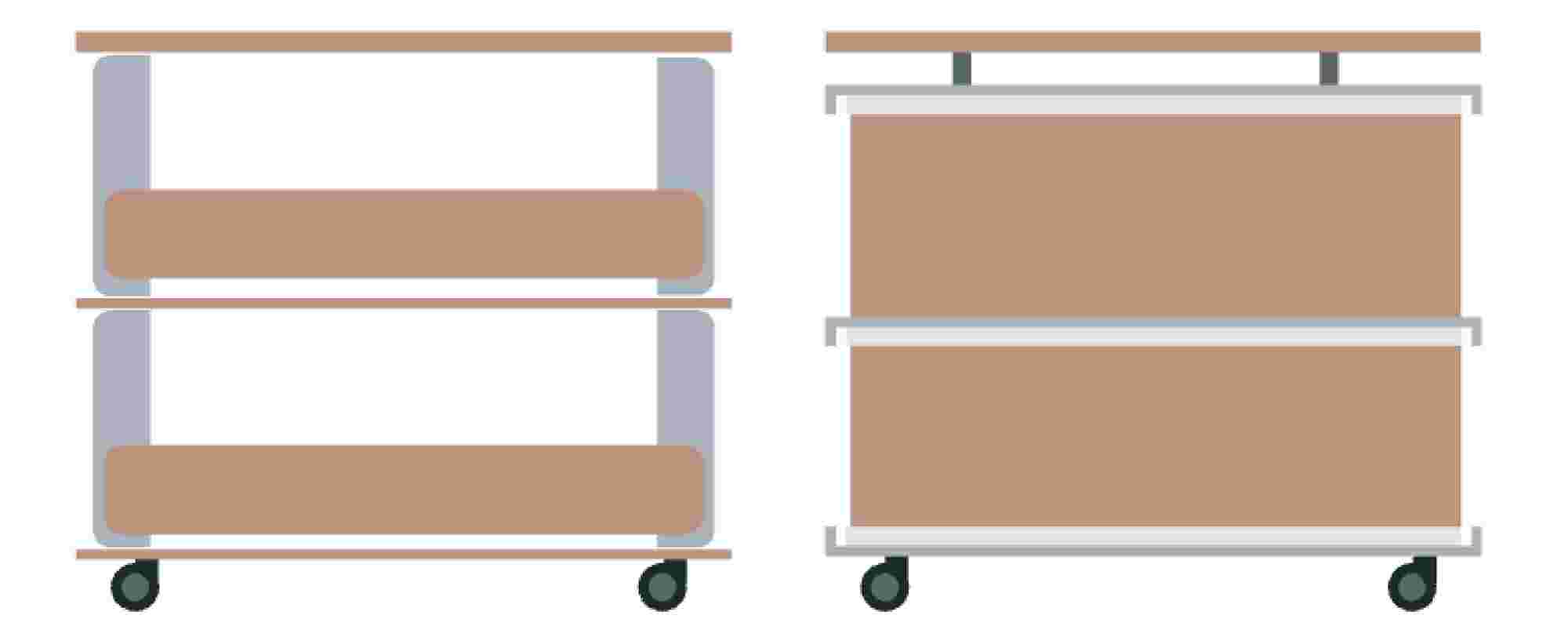

Putting the desk cart on wheels created a shelving system that made everything inside accessible with one easy pull and stowed neatly away with one easy push.
KEN TOMITA: It made me think of kitchen pantries where you pull the whole thing out and all of your ingredients are there.
SEAN KELLY: An added bonus of wheels, we realized, was that it could be pulled into place as a sort of interim L-shape desk.
With that, we landed on our North Star for the desk cart: sized to be the perfect desk sidekick, offering mobility for more desk when you need it and storage without the shortcomings of traditional drawers.
The Right Kind of Mobility
While office carts that swivel are seemingly more versatile in design, they produce an unpredictable user experience. When pulling or pushing these carts with one hand, they rack from side to side, never quite going exactly where you want them to. To solve this problem, we took inspiration from large warehousing systems that maximize storage space while providing ease of access by having a fixed direction of motion.
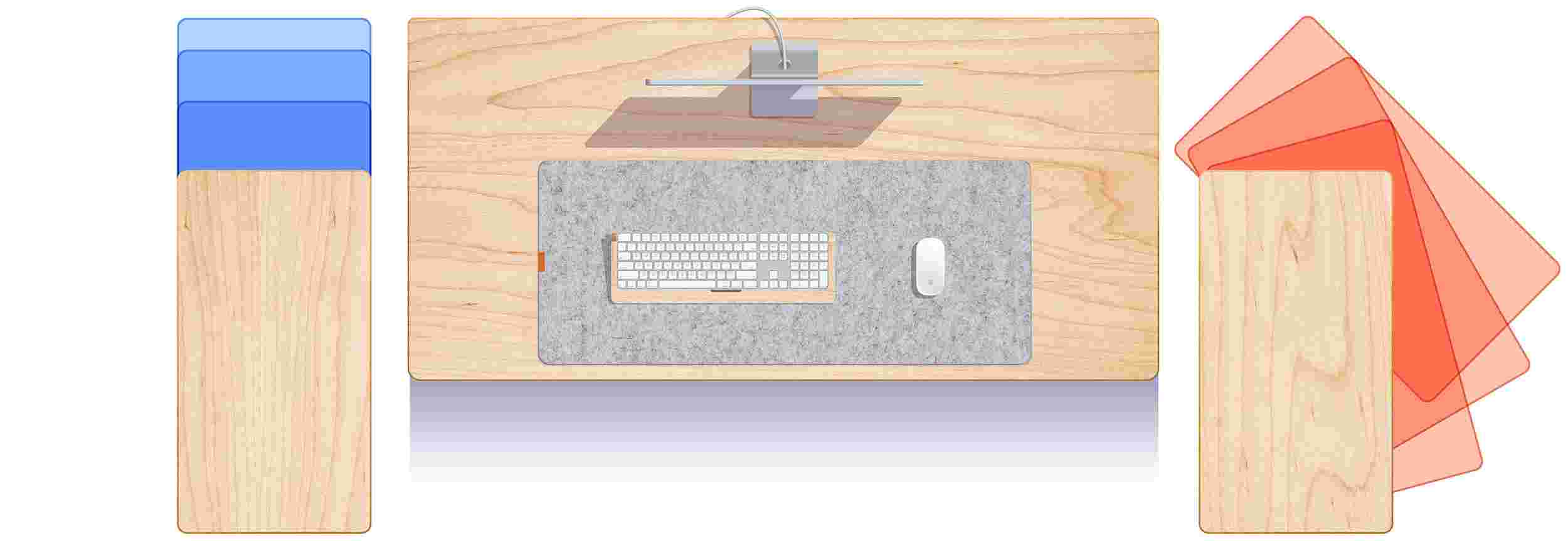

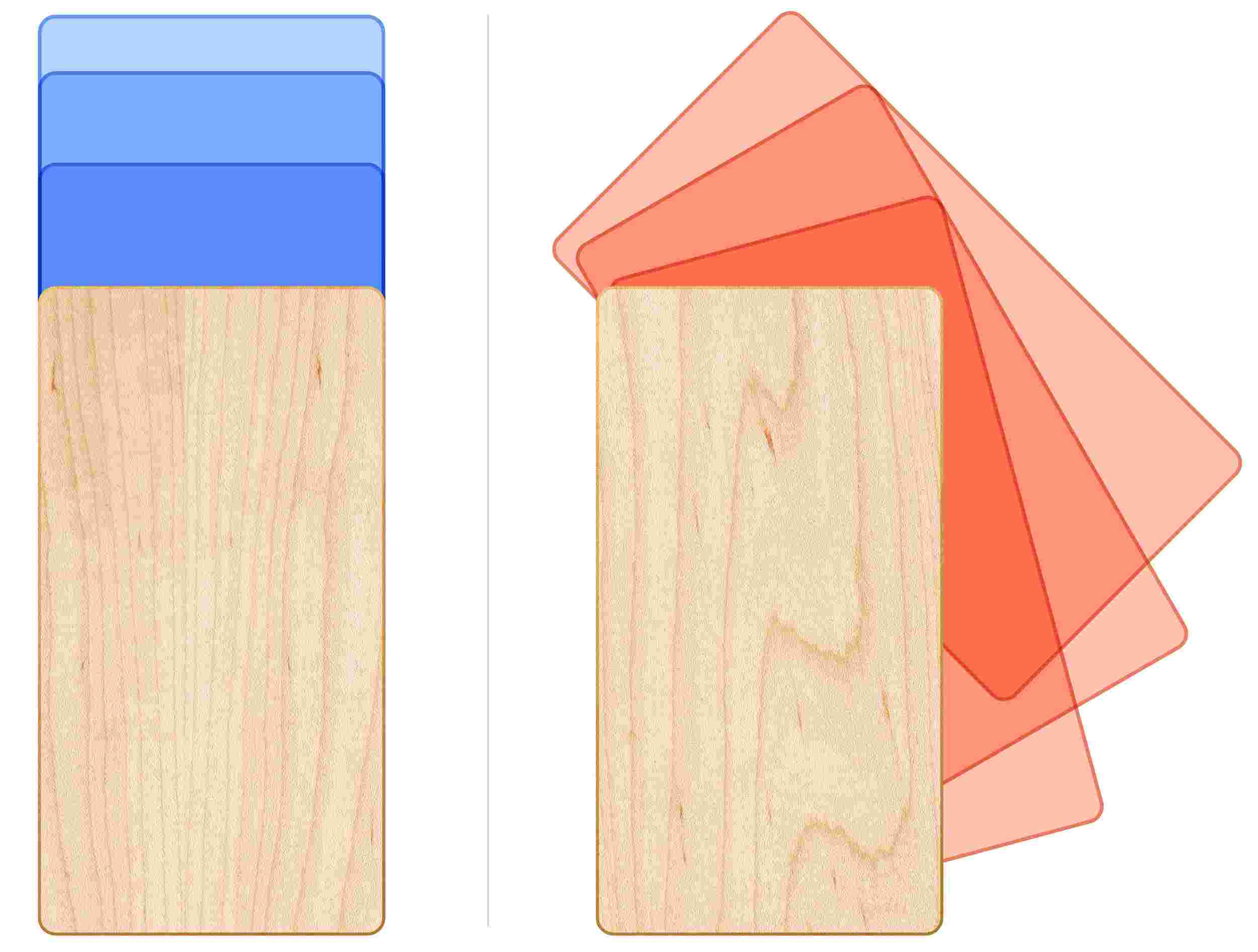

KEN TOMITA: I remembered working in the warehouse at Nike, we had these large storage bays on a track system drilled into the floor. They held thousands of pounds, yet they were effortless to move.
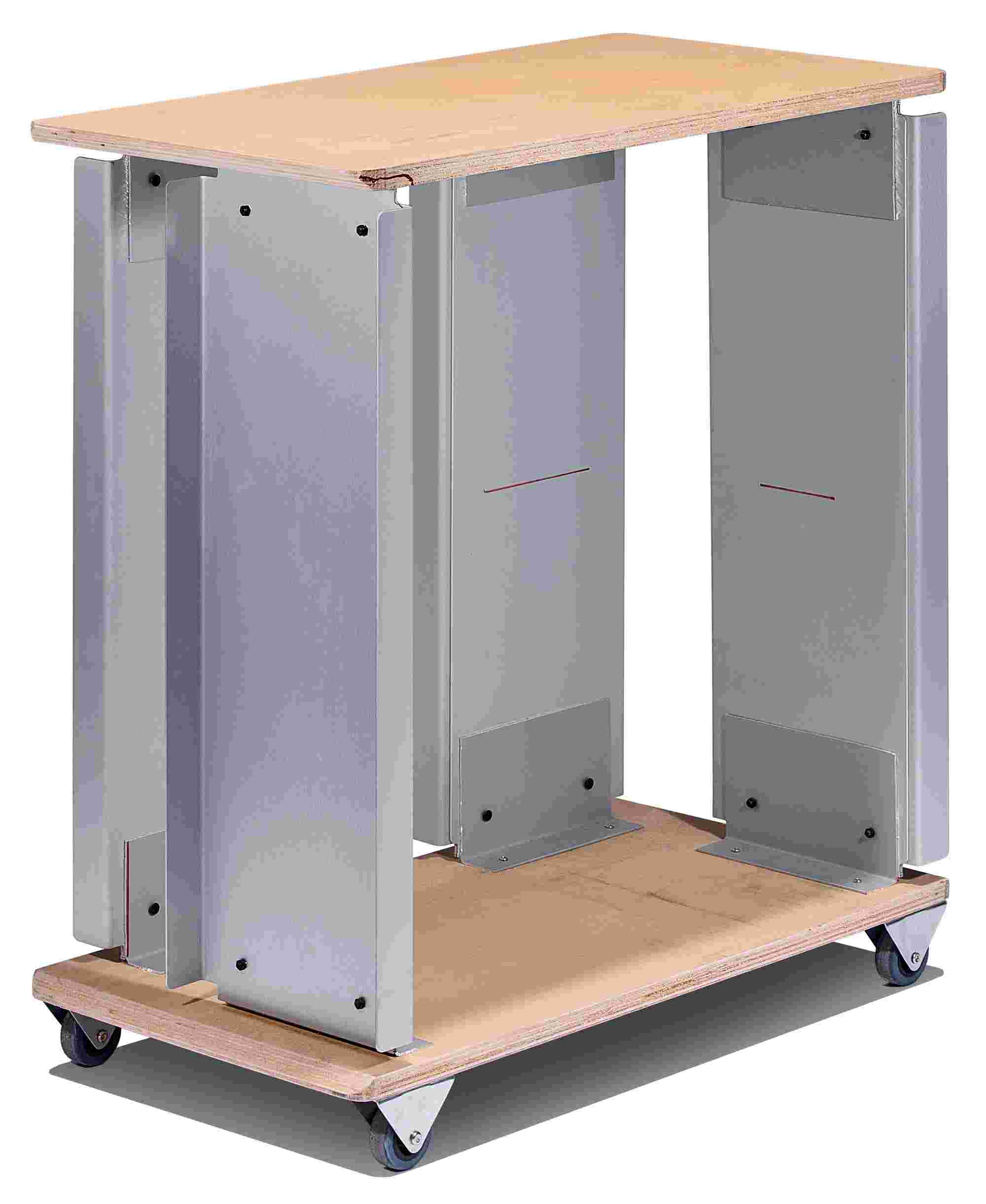
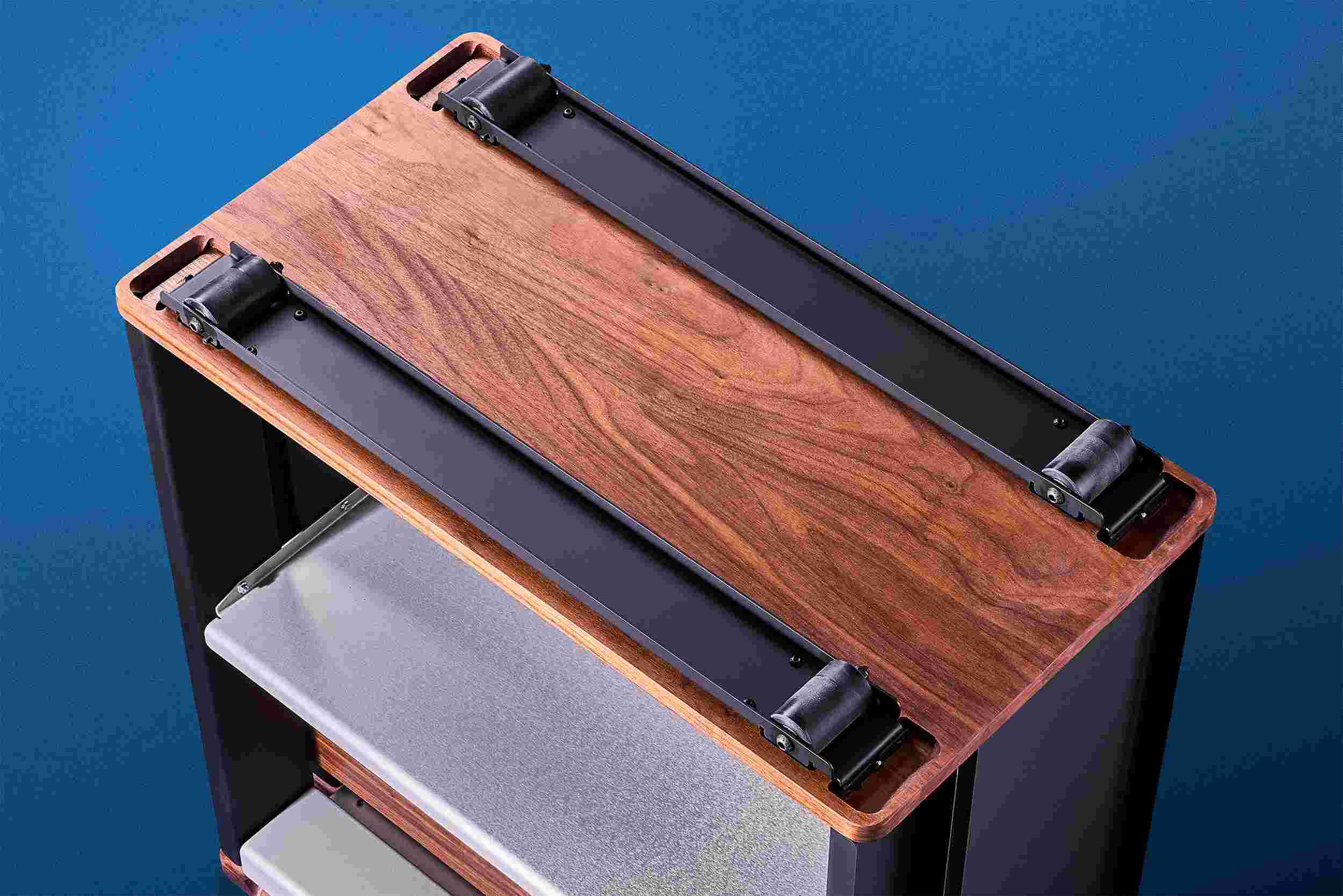
Whenever we’re faced with a decision between sacrificing a product’s integrity and building something totally custom, we always go custom. We opted for four wheels with steel bearings fixed beneath the cart, housed in custom brackets for durability. With parallel tracks, moving the desk cart gives a similar gliding sensation that Ken experienced in the Nike warehouse.

SEAN KELLY: We’re here to make the best product for the home office user even if that means sacrificing mass appeal.
With fixed wheels, the desk cart is able to have permanence in the home office without being permanent. It isn’t something that will be carted from room to room, but for those who share our vision, they’ll find it’s perfect for organizing all the stuff you need handy. The machine you use once a week. The stuff you used to hang across the back of your chair.

The Zones of Storage
Storage is a delicate balance between function and versatility. Go too far in either direction and you’ll have something so over-concerned with features that it fails to be a flexible tool, or so stripped down that it has no organizational structure. We needed “zones” that suggest uses while remaining elastic to the needs a customer might bring to the table.
A good product should inspire creativity. It shouldn’t force you into a certain way.
KEN TOMITA
Co-Founder
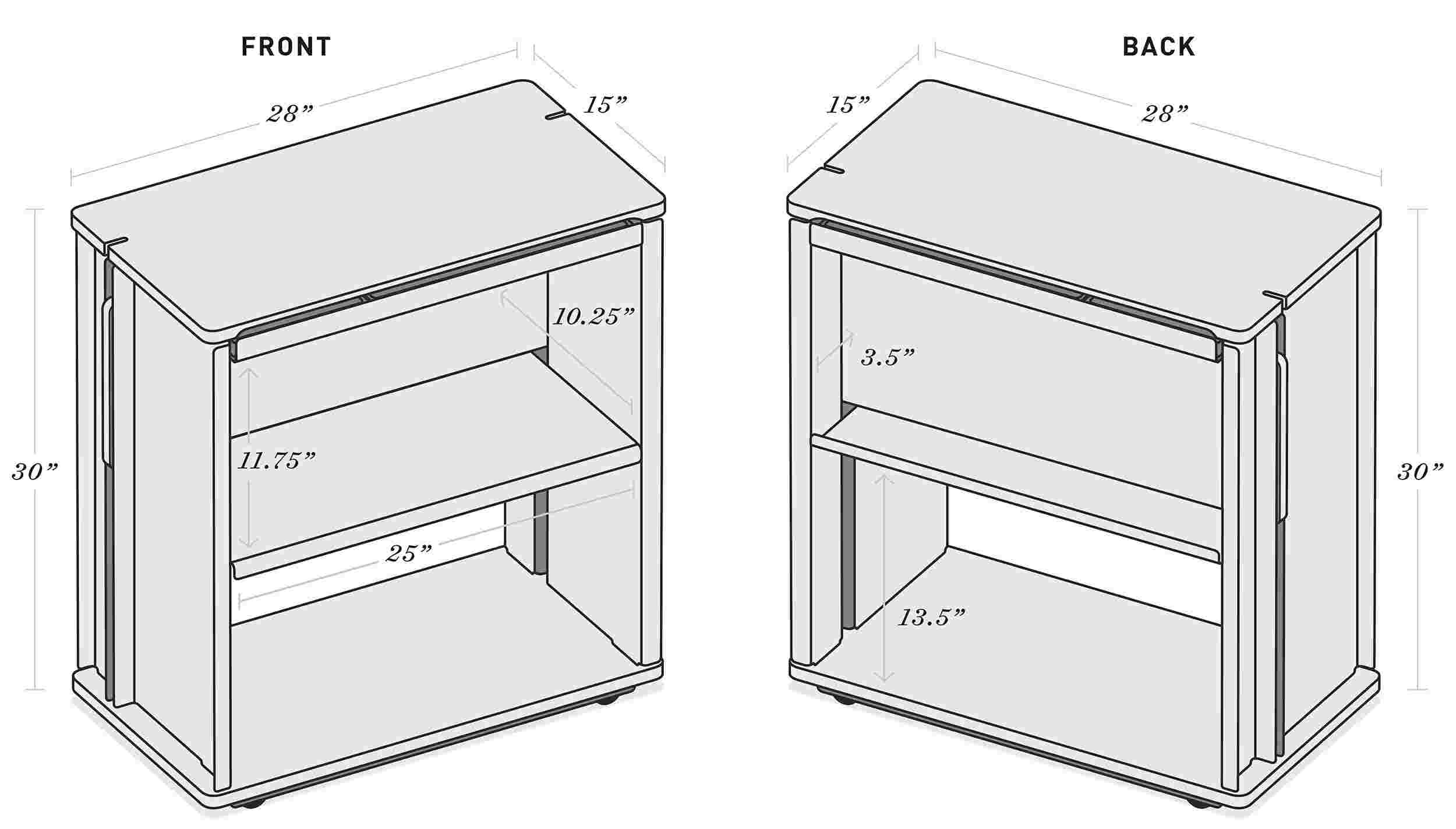

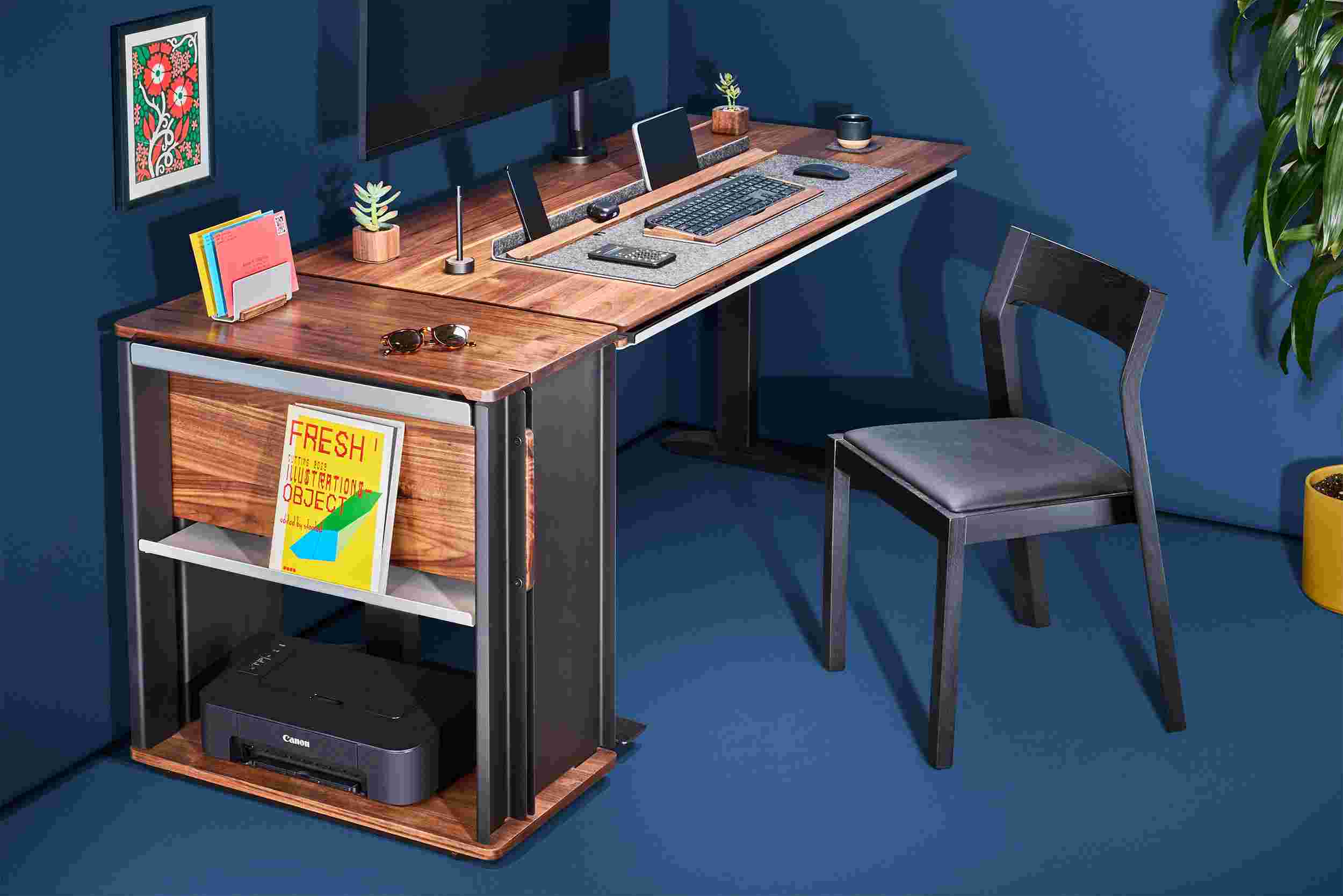
With four, we believe everything is covered. Stow your backpack or satchel underneath in the large storage space. File folders and reference books can live in the medium storage space. Use the push-through drawer to stash the charger extension across from the trusty stapler. And finally, there’s a convenient and intentional place for your printer right on top. Or leave the top empty for a clean look that naturally flows from desk to desk cart.
We Hold Drawers Accountable
KEN TOMITA: If we’re doing a drawer, we’re doing it right.
SEAN KELLY: As a rule for the desk cart, we want everything to be accessible with one or two easy pulls.
Because the drawers we saw caused more problems than they solved, we were resistant to having one. However, in the design process we decided we needed to provide space for the smaller stuff customers actually use and want to be near their desks, but isn’t big enough to live in an open zone.
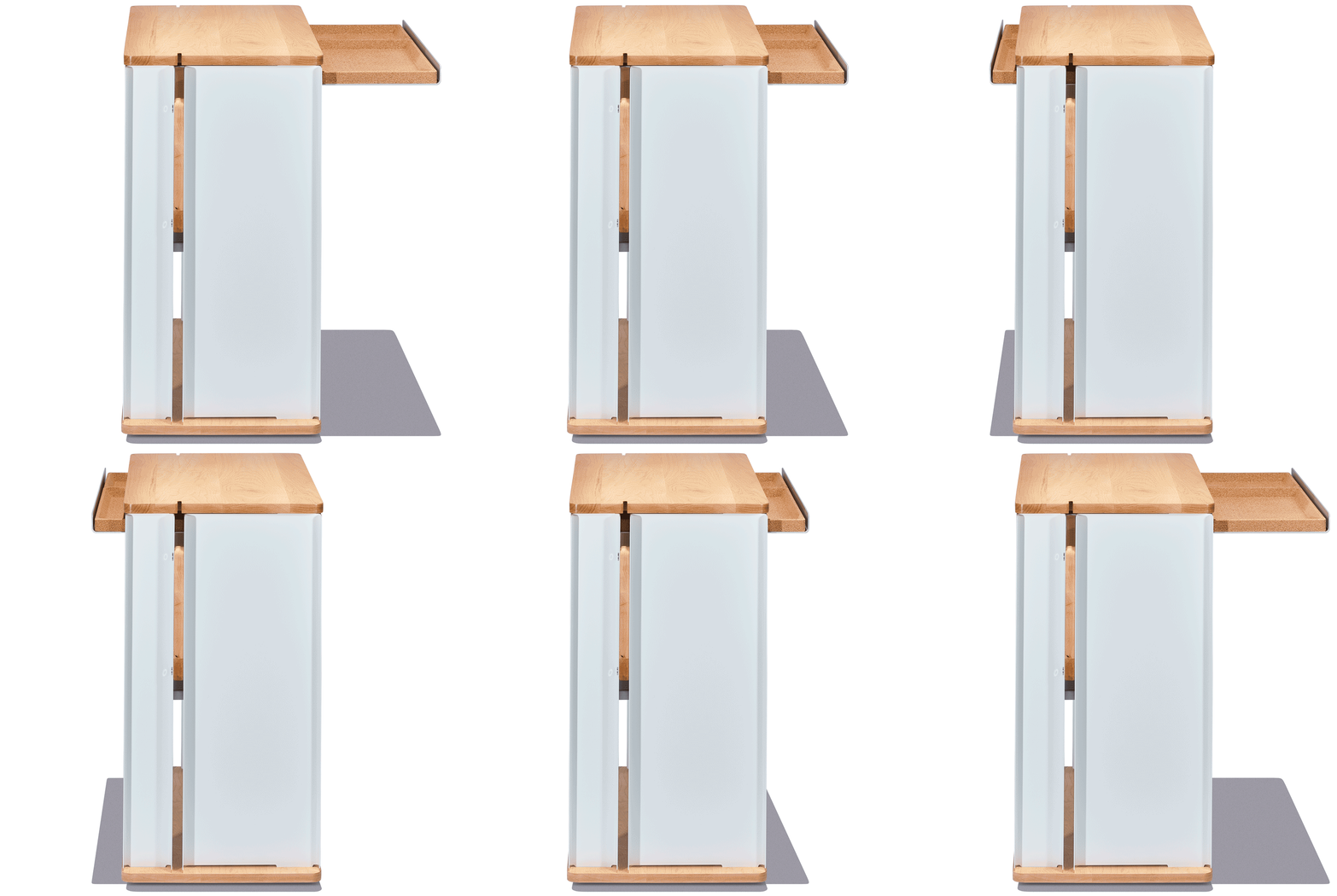
To discourage random storage, it made sense for the drawer to be accessible only when the desk cart was pulled out. We want storing and accessing what’s inside to be a very intentional act. When you have something you want to hide right away, people typically go for a space that is immediately available. Because accessing the drawer takes two pulls, the desk cart drawer won’t be the go-to for random storage.
To discourage random storage, it made sense for the drawer to be accessible only when the desk cart was pulled out. We want storing and accessing what’s inside to be a very intentional act. When you have something you want to hide right away, people typically go for a space that is immediately available. Because accessing the drawer takes two pulls, the desk cart drawer won’t be the go-to for random storage.
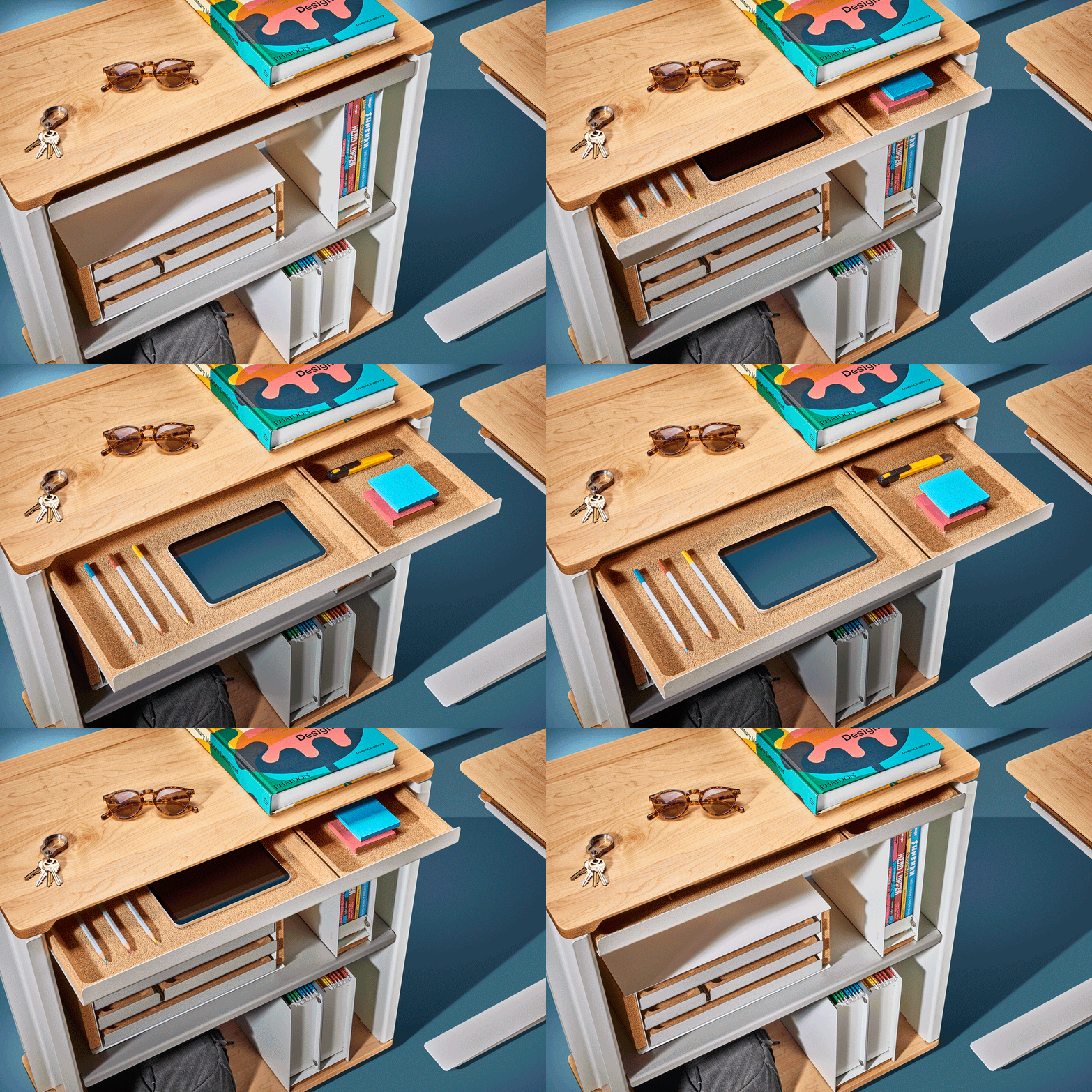
To really hammer that point home, Sean came up with a drawer that could go both ways, divided asymmetrically into two different depths, each with unique machined cork insets, just like those found in the Grovemade Desk. The different drawer sizes with the insets encourage mindful organization for extra auxiliary cords, charger blocks, ink cartridges, etc.
Next, we went to town designing a system that hid the hardware of a drawer. We found that linear guides used in precision machinery worked nicely. The hardware is compact enough to attach underneath the cart’s top while providing the low-friction, highly accurate motion we were looking for. The hardware is strong enough so that no matter the weight inside the drawer and no matter where you pull or push from, it slides effortlessly.
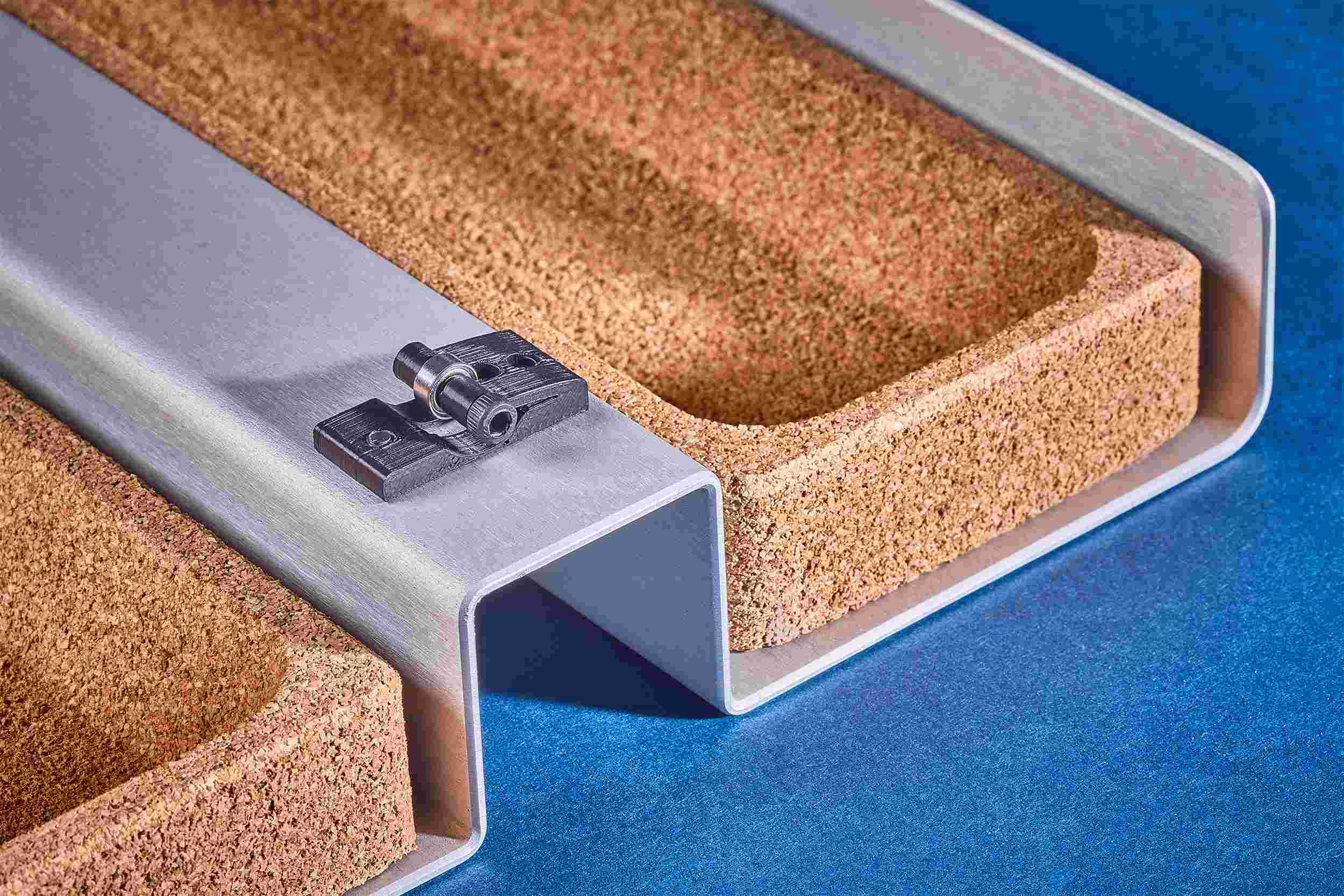

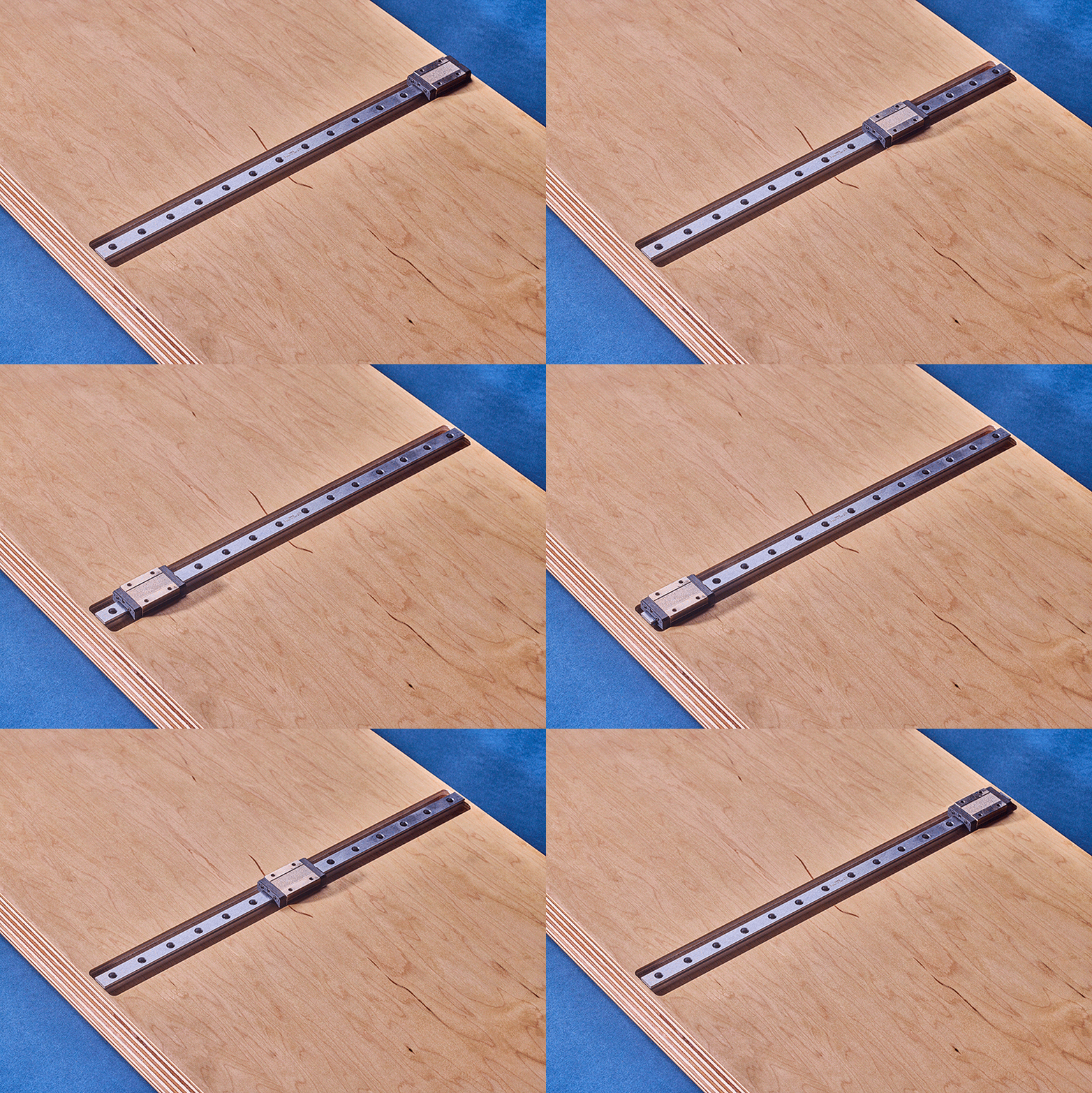
Early in the design process, we realized we needed a mechanism that gives tactile feedback to the user when the drawer is pushed closed from either direction—a way for the drawer to click into place without restricting movement in either direction. Instead of finding an off-the-shelf solution, our manufacturing engineer, Ben, opted to design a custom 3-D printed “detent” system that allows the drawer to be easily opened, then fall securely back into place when closing. Moreover, the detent mechanism and precision hardware gives the drawer a satisfying and almost addictive tactile sensation, allowing the user to feel and hear when the drawer is fully opened and closed.
The Roll Out
With this product, we wanted to start with the problems that people face, even if they don’t realize they’re problems. In our research, we found that there is no such thing as "out of sight, out of mind." If there’s a drawer you don’t want to open because it’s hiding a mess or it’s a hassle to get what’s inside, then it’s causing friction and taking up mental space. We want to solve that problem. We hope people feel relief as the desk cart brings organization to the spaces in their home office that once lived in hidden chaos.
There’s truly nothing else like this out there.
KEN TOMITA
Co-Founder

The Home Office System
Each product stands on its own. But together, they do something different. We know that your work spills beyond your desk. This is your chance to build the home office that fits you.


